
 March 21, 2026
  4:00 pm -
6:00 pm
4:00 pm -
6:00 pm  S’inscrire
 Détails de l’événement
Cet événement sera disponible uniquement en ligne.
Il ne sera pas enregistré. Il ne pourra pas être visionné ultérieurement.
Une transmission unique dans une vie
Cette vidéo n’a pas été enregistrée. Elle ne pourra pas être visionnée ultérieurement.
L’idéal est de tout recevoir, mais si ce n’est pas possible, il est tout de même avantageux d’en recevoir le plus possible.Rinpoche préfère que vous le receviez intégralement.
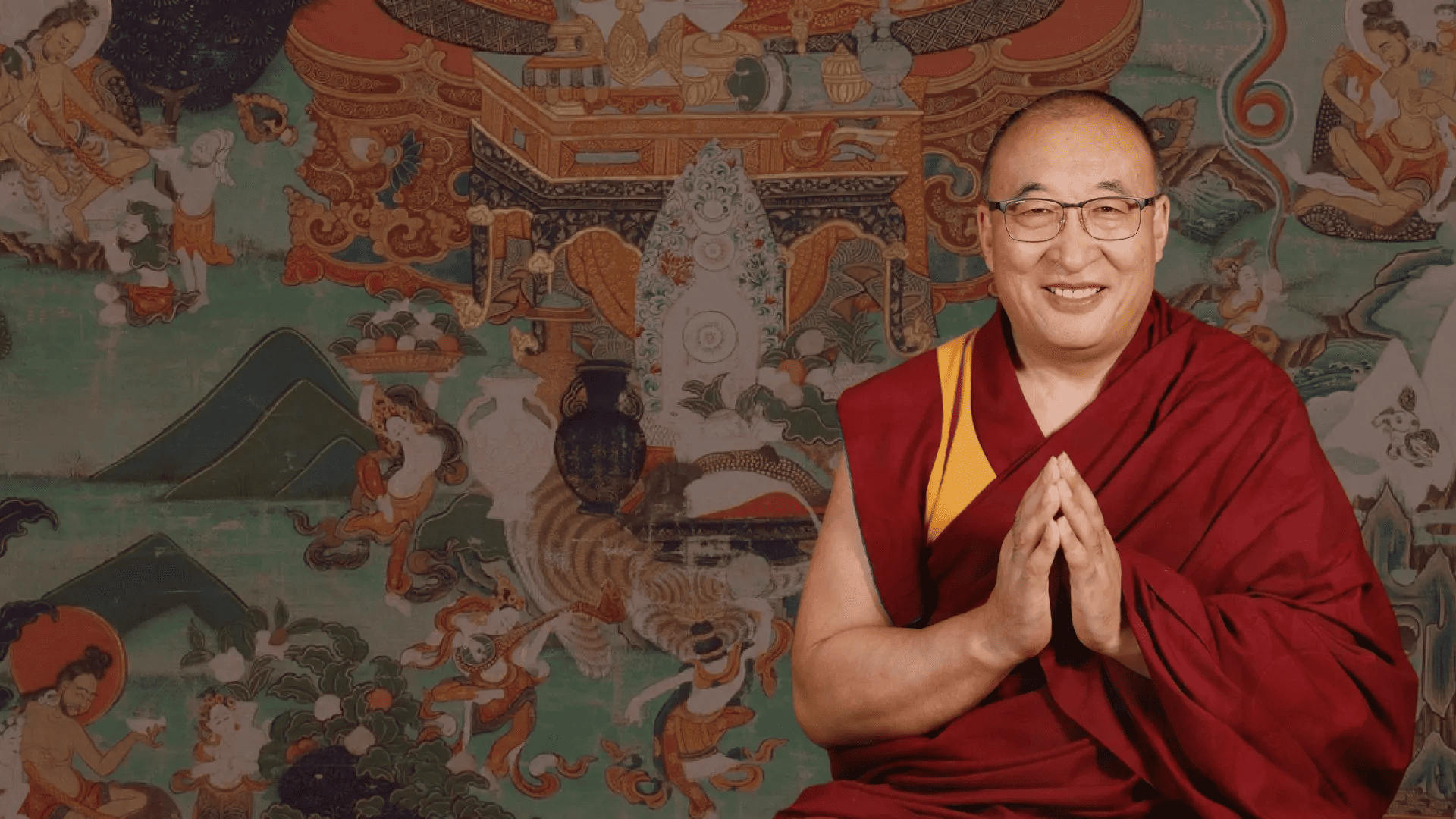
En mars 2026, Shar Khentrul Jamphel Lodrö Rinpoche conférera ce don incroyablement rare et précieux : 108 Instructions essentielles, également connu sous le nom de108 Instructions du Jonang(Jo nang khrid brgyaCe sera la première, et probablement la seule, fois que Rinpoché conférera ce titre complet.poumon(lecture de la transmission).
Pendant deux mois, à raison de deux heures chaque week-end, Rinpoché transmettra ces instructions essentielles, qui mènent directement au cœur des traditions de pratique les plus sacrées du Tibet, préservées par des lignées ininterrompues depuis l’Inde. Ensemble, ces enseignements permettent au pratiquant sincère de toucher la source même du mouvement Rimé.
Origines des 108 Instructions du Jonang
Ce recueil d’initiations, d’instructions et de pratiques a été initialement rassemblé par le maître Jonang aux multiples talents, Kunga Drolchok (1507-1566), qui a ainsi jeté les bases du mouvement Rimé. Sa réincarnation,Jetsun Taranatha (1575-1634), a poursuivi et mené à bien cet effort délibéré d’érudition non sectaire, rassemblant des enseignements presque disparus issus des traditions pratiques du Tibet.
Ensemble, leur travail préserve un éventail de ce que Rimé L’érudit Jamgön Kongtrül (1813-1899) dit Les lignées de pratique historiques des « Huit Grands Chariots de l’Accomplissement Spirituel » du Tibet :
-Nyingma (via Padmasambava et Vimalamitra)
-Kadam (via Atiśa et Dromtön Gyelwé Jungné)
-Sakya (via Virūpa)
-La tradition des six yogas de Kālacakra (via Somanātha, et au XIIIe siècle, Kunpang -Thukje Samdu, résident permanent à Jomonang, depuis lors elle est appelée la tradition de Jonang)
-Marpa Kagyu (via Naropa)
-Shangpa Kagyu (via Niguma)
-Pacification et séparation (par Padampa Sangyé et Machik Labron)
-Approche et accomplissement des trois Vajras (par le biais des révélations de Vajrayoginī à Druthob)Orgyanpa Rinchen Pel)
Le résultat est un joyau éclatant de la littérature tibétaine et l’une des œuvres les plus importantes du bouddhisme, témoignant d’une scolastique impartiale de style Rimé.
Pourquoi cette transmission est rare
La survie de ces instructions n’allait pas de soi. Elles n’ont perduré que parce que des maîtres tels que Shar Khentrul Jamphel Lodro Rinpoche les ont pleinement reçues, les ont pratiquées en retraite et les ont préservées dans leur propre conscience.
Rinpoché a reçu ce Lung à deux reprises : une fois à son monastère racine de Jonang au Tibet et une autre fois de la part de Sa Sainteté le Dalaï Lama.
Compte tenu des efforts que cela implique, Rinpoché prévoit de ne transmettre cet enseignement qu’une seule fois. À notre connaissance, c’est la première fois qu’un groupe international de pratiquants non monastiques a accès à ces enseignements.
À qui s’adresse cette transmission ?
Depuis dix ans, plusieurs disciples de Rinpoché ont sollicité cette transmission spéciale. Chacune des 108 instructions a été choisie à la fois pour préserver la diversité des traditions tibétaines et pour transmettre les pratiques les plus efficaces en matière de développement spirituel.
Par conséquent, cet événement représente une opportunité pour :
-Pratiquants débutants et confirmés en quête d’enseignements authentiques, profonds et ancrés dans la lignée
-Étudiants de toutes les lignées désirant se connecter à l’intégralité du canon d’enseignement du bouddhisme tibétain. L’essence de toutes les traditions est contenue dans cette transmission.
-les étudiants désirant approfondir leur lien avec Khentrul Rinpoche, la tradition Jonang et cette lignée ininterrompue fondée sur la pratique
-Les pratiquants de tous horizons qui apprécient l’esprit Rimé et la merveilleuse diversité de la manière dont le dharma est exprimé par différentes lignées au moyen de différents moyens habiles
Texte recommandé
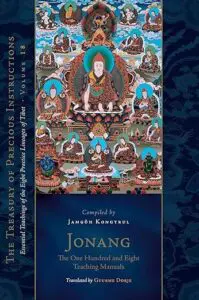
Nous recommandons fortement l’achat de Jonang : Les cent huit manuels d’enseignement Édité par Jamgön Kongtrul (Éditions Shambhala), ce volume contient l’intégralité des 108 manuels, ainsi que les prières de la lignée, des notes autobiographiques, de
Comme aucun texte ne sera fourni pendant la transmission, un commentaire de grande qualité comme celui de Jamgön Kongtrul est essentiel pour étudier, méditer et mettre en pratique ces enseignements après la transmission.
L'intégralité108 Instructions du Jonang:
L’intégralité108 Instructions du Jonang:
1) Instructions pour séparer les quatre types de fixation (Zhen pa bzhi bral)
2) Instructions sur sept points d’entraînement de l’esprit (Je suis désolé, je ne comprends pas.)
3) Instruction sur l’essence de l’interdépendance (Le ‘brel snying po)
4) Instructions sur l’utilisation de la douleur et du plaisir comme voie (Skyid sdug lam khyer)
5) Instructions pour entraîner l’esprit (Sum pa’i blo sbyong)
6) Instructions pour vaincre la peur selon Machik Labdron (Si vous voulez aller n’importe où)
7) Instructions sur les trois points essentiels (Snying po don gsum)
8) Instructions pour apaiser l’esprit (Sems comme gso)
9) Instruction sur les trois types de personnes (Ciels de Gsum)
10) Instruction sur une approche progressive des enseignements (Jante Bstan)
11) Instruction sur l’égalisation du saṃsāra et du nirvāṇa (Srid zhi rêves yid)
12) Instruction sur le grand madhyamaka (Je suis désolé.)
13) Instructions sur la guidance secrète du Kadam (Bka’ gdams lkog khrid)
14) Instruction du Muni (Thub pa’i chrid)
15) Instructions sur le fait de rester non avoué (Mon g.yo ba)
16) Instruction sur la pratique d’Avalokiteśvara (Spyan ras gzigs)
17) Instruction sur la pratique de Tārā (Grol-moi)
18) Instruction sur les maximes du maître Kadampa Potowa (Po to ba’i dpe chos)
19) Instruction sur les seize sphères séminales (Venez avec un médicament bcu)
20) Instruction sur la prajñāparamitā (Sher phyin bka’ babs)
21) Instruction sur les cinq voies de la pacification (Zhi byed lamb lnga)
22) Instructions sur les étapes progressives de la méditation (Sgom rim thog mtha’ bar gsum
23) Instruction sur les cinq traités de Maitreya (Le chos long de Byam)
24) Instruction sur la vue de rangtong (Rang stong lta kharid)
25) Instruction sur le point de vue de Zhentong (Gzhan strong lta khrid)
26) Instruction sur le sens caché (Sbas don)
27) Instructions pour améliorer la vie (C’est exact.)
28) Instruction sur la pratique de la Tārā blanche (grosse bite)
29) Instruction sur la pratique des Amitāyus blancs (Tshe dpag med dkar po)
30) Instruction selon la tradition Tshembu (Dmar khrid chem bu lugs)
31) Instruction selon la tradition Palmo (Dmar khrid dpal mo lugs)
32) Instruction selon la tradition Zagyal (Dmar khrid zla rgyal lugs)
33) Instruction selon la tradition Khyer Gangpa (Dmar Khrid Skyer sgang pa’i cosses)
34) Instructions sur la pratique de Cakrasaṁvara (Bde mchog dmar khrid)
35) Instruction sur la pratique du Hevajra (Kye rdo rje’i dmar khrid)
36) Instruction sur la pratique du Vajrapāṇi (Phyag rdor ‘khor chen)
37) Instruction sur le yoga de la chaleur intérieure (Allons-y.)
38) Instruction sur la pratique du Varāhī (Vous êtes les bienvenus.)
39) Instructions sur la pratique du Kurukule (Allez, allez.)
40) Instruction selon la lignée murmurée du Kālachakra (So ‘khor snyan brgyud)
41) Instruction sur l’approche et les pratiques d’accomplissement du maître tibétain Orgyan Rinchen Pal (O rgyan bsnyen sgrub)
42) Instruction sur la prise en compte du résultat comme chemin (Lamb’s)
43) Instruction sur l’inconcevable (Mon cher)
44) Instruction sur les neuf voies de la profondeur (Zab pa’i tshul dgu)
45) Instruction sur la pratique de l’accomplissement spontané (Lhan cig skyes grub)
46) Instructions relatives à l’achèvement du processus de chauffage interne (Allons voir les lam rdzogs)
47) Instructions d’alignement (Ça vous convient ?)
48) Instructions sur la pratique des mudras (Phyag rgya lam khrid)
49) Instruction sur le mahāmudra sans symboles (Phyag rgya chen po yi ge med pa)
50) Instructions sur la pratique à proximité d’un stupa (Mchod rten drung thob)
51) Instruction sur la synthèse des sūtra et des tantra (Ça va ?)
52) Instructions pour chasser l’obstacle des esprits extérieurs (Phyi rol gdon gyi bar tchad sel ba)
53) Instructions pour éliminer les obstacles aux agitations corporelles (« Byung n’est pas perdu » Khrugs n’est pas perdu)
54) Instructions pour lever les obstacles au samādhi (Ting nge ‘dzin gyi bar chad sel ba)
55) Instructions pour supprimer les trois sortes de souffrance (Cellule Sdug Anglais Gsum)
56) Instruction sur le rappel de l’état naturel (Gnyug ma dran gsal)
57) Instruction sur les trois puretés (Pass journalier)
58) Instruction sur l’auto-consécration (Coloration par rlabs)
59) Instruction sur le chemin caché (Lam sbas bshad)
60) Instructions pour clarifier la signification symbolique (Brda’ ne gsal)
61) Instruction sur les cinq étapes du Guhyasamāja (Gsang ‘dus rim lnga)
62) Instruction sur le traité Muktitlakanāma associé au Guhyasamāja (Grol, ils sont épais)
63) Instructions sur la non-prolifération (Parlez avec)
54) Instructions sur le yoga en quatre étapes (Rnal ‘byor bzhi rim)
65) Instruction sur la pratique de Bhairava (« Jigs byed »)
66) Instructions sur la mobilisation des forces masculines dans le canal central (Yab la brten rtsa dbu ma)
67) Instructions sur la mobilisation des forces féminines dans le canal central (Yum gyi rtsa dbu ma)
68) Instruction tirée de la tradition de Gantapada (Perceuse à jante lngga)
69) Instruction sur les quatre étapes de la pratique de la divinité noire Mahākāla (Nag po rim bzhi)
70) Instruction sur la pratique du Cakrasaṁvara blanc (Bde mchog dkar po)
71) Instructions sur les quatre sièges (Bonjour.)
72) Instruction sur la pratique du Mahāmāya (Mais je ne sais pas.)
73) Instruction sur la pratique de Cakrasaṁvara avec un visage d’âne (Bde mchog bong zhal peut)
74) Instruction sur les six pratiques de Varāhī (Je suis toxicomane.)
75) Instruction sur le yoga sextuple de Nāropa (NA ro’i chos drogue)
76) Instruction sur le yoga sextuple de l’adepte féminine Niguma (Ce n’est pas comme une drogue.)
77) Instruction sur la tradition Gauma du mahāmudra (Phyag rgya chen po ga’u ma)
78) Instructions pour emprunter le chemin (Lam ‘khyer)
79) Instruction sur l’esprit immortel (Sems ‘chi med)
80) Instruction sur les six dharmas de Sukha (Su kha chos drogue)
81) Instruction de dame Dakmema (Bdag med ma’i nang khrid)
82) Instruction sur le yoga de la spontanéité (Lhan cig skyes sbyor)
83) Instruction sur le mahāmudra quintuple (Phyag Chen longue vie)
84) Instruction sur les quatre symboles du mahāmudra (Phyag rgya chen po yi ge bzhi pa)
85) Instructions sur l’introduction des trois dimensions éclairées (Je suis désolé, je suis désolé.)
86) Instruction sur l’inséparabilité de l’esprit et des vents vitaux (Rlung sems gnyis avec)
87) Instruction sur la pratique du Sekarma (Sras mkhar ma)
88) Instructions sur le transfert de conscience selon la tradition Ngok (Rngog pa’i bsre ‘pho)
89) Instructions sur les quatre déclarations principales (Snyan gyi shog dril bzhi)
90) Instruction sur le yoga sextuple du Kālachakra (Médicament Sbyor)
91) Instruction sur les six pratiques associées aux centres du haut du corps (Snyan brgyud steng sgo parce que drogue)
92) Instruction sur les neuf cycles d’enseignements associés aux ḍākinīs désincarnées (Poux avec mkha’ ‘gro’i chos skor dgu)
93) Instruction sur le vaste et le profond selon Zhang (Zhang gi zab rgya)
94) Instruction sur le yoga sextuple de Dra Lotsāwa (Dpal chen rgwa n’est pas un médicament sbyor)
95) Instruction sur le cycle du mahāmudra par Phakmo Drupa Dorje Gyalpo (Phag gru phyag chen thel skor)
96) Instruction sur l’intention unique (boulettes de viande)
97) Instruction sur les six dharmas de Tak Lungpa Tashi Pal (Stag lung pa’i chos drug)
98) Instruction sur l’expérience unique des présages associés à la sadhana du gourou (Bla sgrub rten ‘brel ro snyoms)
99) Instruction sur cinq aspects selon Loray (Lo ras thub pa lnga ldan)
100) Instructions sur les six pratiques essentielles pour la retraite en montagne (Ri Chos Snying Po Ma Drug)
101) Instructions sur la propitiation du protecteur Kurakma (Je suis désolé, je suis désolé.)
102) Instructions sur la propitiation du protecteur Palgur (Dpal gur gyi mgon po’i nang khrid)
103) Instruction sur les trois cycles de la poésie spontanée (Avez-vous un skor ?)
104) Instructions sur les six dharmas d’un siddha (Grub thob chos drogue)
105) Instruction sur la voie progressive selon Padmasambhava (Pad+ma jante lam)
106) Instruction selon l’édit d’un roi (Rgyal po bka’ ‘bum)
107) Instruction sur le joyau qui libère lorsqu’il est vu (Nor bu mthong grol)
108) Instruction sur l’esprit comme un joyau exauçant les souhaits (Sems khrid yid bzhin nor bu)
Qu’est-ce qu’une transmission Lung?
Ceci est un Lung (lecture) transmission, l’un des trois modes de transmission dans le bouddhisme Vajrayana, parallèlement à Wang(autonomisation) et thri(instructions). Pendant un Lung Lors de la transmission, l’enseignant lit le texte sacré à haute voix, souvent rapidement, pendant de longues périodes, et en tibétain. Le but est double :
1 – Il autorise les élèves à lire et à étudier le texte.
2 – Elle transmet l’énergie et l’héritage de la lignée, maintenant ainsi la chaîne ininterrompue du maître à l’élève.
Comment recevoir un Lung
Que vous parliez tibétain ou non, avec un Lung Il ne s’agit pas de comprendre les passages tels qu’ils sont lus. Même lorsque le texte est inconnu ou difficile, la transmission vise à imprégner l’esprit de l’élève de toute la richesse et du potentiel des enseignements.
Pour recevoir le Lung en effet :
-Gardez la bonne motivation et la bonne vision
-Restez présent et attentif dans un état méditatif.
-Méditez intensément sur le son si vous le pouvez.
-Laissez tomber la tentation de faire du Lung une lutte intellectuelle
-Ayez confiance dans le pouvoir du rituel, dans les bénédictions de sa lignée et dans le gourou.
Cette approche permet l’impact profond du Lungs de se déployer au fil du temps par l’étude, la contemplation et la pratique.
Que puis-je faire avec ce pouvoir ?
Cette transmission va :
-Approfondissez votre appréciation de la pratique et de l’étude non sectaires du Rimé, quelle que soit votre tradition.
-Vous aider à comprendre comment les principales lignées de pratique du Tibet se complètent tout en conservant des qualités distinctes
-Approfondissez vos liens avec la lignée Jonang et Khentrul Rinpoche
Les 108 Instructions offrent un large aperçu des atouts des multiples lignées de pratique, soulignant l’importance de préserver et d’apprécier leurs méthodes diverses et habiles pour nous, pratiquants aux profils variés.
Qui peut participer ?
Tout pratiquant du Dharma, quelle que soit sa tradition, est le bienvenu. Khentrul Rinpoché recommande d’assister à l’intégralité des transmissions, mais si vous en manquez une, il est toujours bénéfique d’en recevoir le maximum. Nous ne savons pas quelle partie du texte sera enseignée à quel moment et nous indiquerons les sections enseignées chaque semaine sur notre plateforme d’apprentissage en ligne Dzokden afin que vous puissiez savoir quelle partie vous avez reçue.
FONCTIONNEMENT DE LA TRANSMISSION EN LIGNE
1) Inscrivez chaque participant qui recevra la transmission. Vous serez ajouté au cours le apprendre.dzokden.org
2) Vous devez recevoir la transmission en ligne en temps réel et y assister dans la mesure du possible. La transmission ne sera pas enregistrée. Aucun texte ne sera fourni pour cet événement.
3) Vous recevrez un accès à Zoom pour chacune des sessions de la semaine de la transmission.
COÛTS VARIABLES DU PROGRAMME
Le Dharma n’est pas à vendre, mais l’organisation d’événements internationaux engendre des frais. Afin de rendre ces événements accessibles à un large public, nous avons créé trois niveaux de participation, car nous devons collecter des fonds pour couvrir ces coûts. Les tarifs ont été ajustés en fonction du coût de la vie dans différents pays. Nous vous remercions de votre compréhension, qui nous permet de rendre ces événements accessibles à notre communauté mondiale. Si votre situation financière vous empêche de participer à ce programme, nous mettrons tout en œuvre pour vous permettre d’y assister.
Horaires par fuseau horaire
Europe centrale (CET → CEST le 29 mars)
Séance 1 – 21 mars /6h00
Séance 2 – 29 mars /00h00 (minuit)
Séance 3 – 5 avril /2h00 du matin
Séance 4 – 12 avril /8h00
Séance 5 – 19 avril /2h00 du matin
Séance 6 – 26 avril /8h00
Séance 7 – 3 mai /2h00 du matin
Séance 8 – 10 mai /8h00
Séance 9 – 17 mai /2h00 du matin